
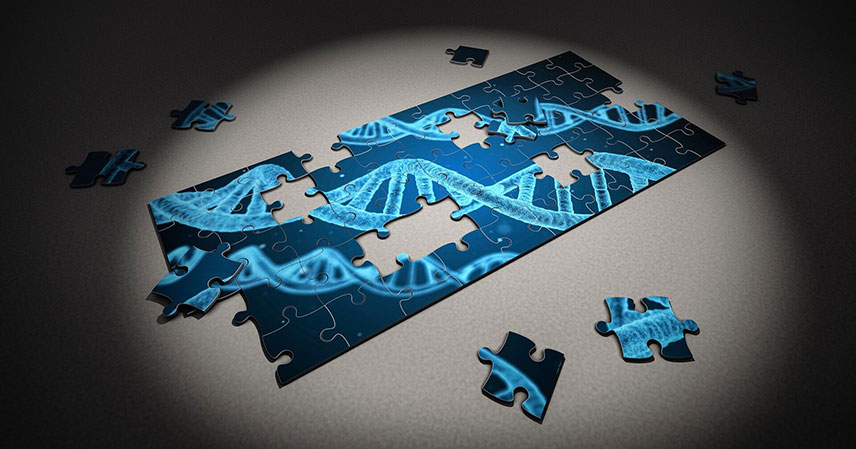
A groundbreaking study, recently published in Nature Genetics, has introduced a powerful computational method. This method can detect how genes interact with each other. It influences complex human traits on an unprecedented scale. This is a significant leap forward in genetic research. It moves beyond the traditional view of individual gene effects.
Researchers applied this innovative technique to vast datasets. These datasets paired individual genomes with specific traits. The findings provide compelling evidence for these intricate gene interactions. They reveal that a person’s overall genetic background can profoundly alter how individual genetic variants impact their characteristics. This discovery reshapes our understanding of genetic influence.
Unlocking the Genetic Symphony: Beyond Single Genes 🧬
For decades, genetic research primarily focused on identifying individual genes. Scientists often looked for single genetic variants. These variants were thought to be directly associated with particular traits or diseases. This approach has yielded many crucial insights. It has helped us understand many inherited conditions.
However, many human traits are complex. They include height, intelligence, and susceptibility to common diseases like diabetes or heart disease. These traits are not simply controlled by one or two genes. Instead, they arise from a complex interplay. Many genes interact with each other. This phenomenon is known as epistasis. Understanding epistasis has been a major challenge.
Previous methods struggled with the sheer complexity. The number of possible gene interactions is astronomical. It increases exponentially with the number of genes involved. This made comprehensive analysis virtually impossible. Researchers needed a more sophisticated tool. The scientific community has long sought a way to decipher this genetic symphony. This new method offers a potential solution.
The Computational Revolution: A New Lens on Our DNA 🔬
The newly developed computational method represents a significant technological advancement. It provides an unprecedented capability. It can systematically identify gene-gene interactions. This method was designed to handle enormous quantities of data. It processes information at a scale previously deemed unattainable.
Researchers utilized massive genomic datasets. These datasets contain genetic information from many individuals. They also include detailed measurements of various traits. This rich data environment allowed the method to shine. It could sift through millions of genetic markers. The method then identified significant interaction patterns. This marks a paradigm shift in genetic epidemiology.
The findings strongly suggest a crucial insight. Our genetic makeup is not a simple sum of its parts. Instead, it is a dynamic network. Individual genetic variants do not act in isolation. Their effects are often modified. They are influenced by the presence or absence of other variants. This contextual understanding is vital. It deepens our appreciation of genetic complexity.
Implications for Health and Personalized Medicine 💡
This breakthrough has profound implications for human health. It particularly impacts the field of personalized medicine. Understanding gene interactions allows for more precise risk assessments. It can also lead to more tailored treatment strategies. This moves us closer to truly individualized healthcare.
Consider a genetic variant known to increase disease risk. This study suggests its impact might vary greatly. The effect depends on an individual’s unique genetic background. This means a variant could be highly impactful for one person. It might have minimal effect on another. This personalized view is crucial for effective prevention.
For drug discovery, this research opens new avenues. Identifying interacting genetic pathways could reveal novel drug targets. These targets might be more effective for specific patient subgroups. It could lead to the development of more targeted therapies. This could revolutionize how we treat complex conditions. Conditions such as autoimmune diseases, cancer, and neurological disorders might benefit.
The method also holds promise for better understanding disease mechanisms. Many common diseases are multifactorial. They involve both genetic and environmental components. Deciphering gene interactions could untangle these complex webs. It could provide clearer insights into disease onset and progression. This understanding is key to developing better interventions.
Key Insights from the Groundbreaking Research ✨
- The new computational method significantly advances our ability to detect complex gene-gene interactions in humans.
- Researchers found that an individual’s genetic background can substantially modify the effects of specific genetic variants on traits.
- This breakthrough moves genetic research beyond single-gene analyses. It provides a more holistic view of how our genome influences complex traits and disease susceptibility.
- The findings have considerable potential for advancing personalized medicine, improving disease risk prediction, and identifying novel drug targets.
This study represents a pivotal moment in genomics. It provides a powerful tool to explore the intricate relationships within our DNA. As researchers continue to apply and refine this method, we can expect deeper insights. These insights will further clarify how our genes conspire to shape who we are. They will also shed light on our predisposition to various health conditions. The journey to fully map the human genetic landscape continues. This new method is a significant step forward.
Source: Computational tool can detect how genetic interactions impact human traits