
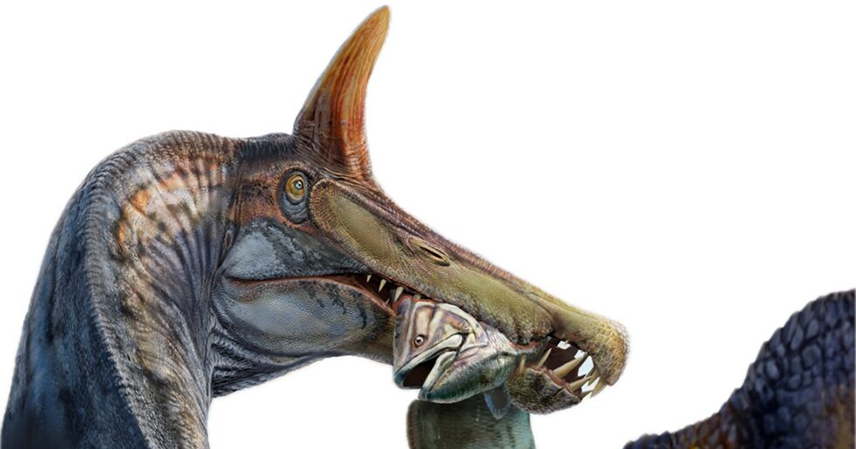
The mighty Spinosaurus has long captivated scientists and filmmakers alike. This distinctive dinosaur boasts an impressive sail-back and a crocodile-like snout. Its identity has shifted dramatically over the years.
Hollywood first depicted it as a formidable terrestrial predator. It was even capable of challenging a T. rex. However, its scientific depiction later evolved. Recent consensus suggested a largely aquatic lifestyle. This interpretation painted Spinosaurus as a powerful swimmer and diver. It was thought to be perfectly adapted to ancient coastal environments.
Groundbreaking new research now rewrites this narrative. It comes from the harsh Sahara Desert. New findings suggest previous understandings, both cinematic and scientific, might be incorrect. The enigma of Spinosaurus continues to unfold.
From Silver Screen to Scientific Scrutiny: A Shifting Identity 🎬
Many first met Spinosaurus in “Jurassic Park 3.” The film portrayed it as a colossal, land-based hunter. It was a direct rival to the iconic Tyrannosaurus rex. While thrilling, this cinematic vision lacked scientific backing. Paleontologists soon questioned its accuracy. They noted its relatively fragile skull.
Later, films like “Jurassic World Rebirth” adopted a more scientific view. This version presented Spinosaurus as a fully aquatic diver. This aligned with growing paleontological evidence. Discoveries consistently placed Spinosaurus remains in coastal deposits. These findings hinted at a life spent near ancient seas and oceans.
The prevailing theory suggested it functioned like a prehistoric seal. It would hunt in the water. It might only venture onto beaches to rest. This aquatic interpretation gained significant traction. Its unique anatomy seemed ideal for this lifestyle. Its long, narrow jaws and conical teeth were perfect for catching fish. Its dense bones were also thought to aid buoyancy control, like modern aquatic mammals. For a time, the image of a powerful, deep-diving Spinosaurus became the accepted norm.
The Sahara Desert Revelation: Bones That Don’t Dive 🏜️
The established understanding of Spinosaurus’s aquatic prowess now faces a significant challenge. A team made a remarkable discovery. It was deep within the harsh Sahara Desert. Renowned paleontologist Paul C. Sereno led the expedition. His team unearthed crucial new Spinosaurus fossils. These findings directly contradict the deep-diving hypothesis.
The most startling implication is that Spinosaurus likely could not dive effectively. This is despite its coastal habitat and fish-eating adaptations. Previous models often assumed its bone density allowed for submersion. However, detailed analysis of the new bone structures suggests otherwise. These bones indicate a creature better suited for shallow water or terrestrial movement. They do not support the robust, dense skeletal framework typically found in proficient divers.
This revelation forces a drastic re-evaluation. If Spinosaurus couldn’t dive, its lifestyle was far more complex. Its presence in coastal deposits still points to a strong water connection. Yet, the inability to fully submerge changes everything. It suggests a different kind of aquatic interaction. Scientists must now consider alternative ecological niches for this magnificent dinosaur.
The Sahara discovery is profoundly significant. It moves beyond revising a single biological aspect. It fundamentally alters our understanding of its entire ecological role. It highlights the dynamic and often surprising nature of paleontological research. New evidence can overturn long-held beliefs, even those with strong prior data.
Re-evaluating Ancient Habitats: A Terrestrial-Coastal Hybrid? 🤔
If Spinosaurus was not a deep-diving aquatic predator, what was its true nature? This new evidence opens fascinating possibilities. It compels a more nuanced understanding of its habitat and hunting strategies. Perhaps Spinosaurus was a semi-aquatic ambush predator. It might have stalked the shallows of rivers, lakes, and coastal lagoons. Here, it could snatch fish and other prey from the water’s edge. This behavior resembles modern-day crocodiles, not seals.
Fossils found in the Sahara further complicate the picture. This area was once a lush, riverine environment. It was not a vast ocean. This suggests Spinosaurus was highly adaptable. It could thrive in various freshwater and brackish water systems. It likely patrolled shorelines. It used its powerful limbs for walking on land and navigating shallow waters.
Its sail might have served multiple purposes. Beyond display, it could have been a thermoregulator. It might even have aided navigation in strong river currents. This reinterpretation moves away from the “prehistoric seal” analogy entirely. Instead, it positions Spinosaurus as a unique creature. It exploited the rich resources of ancient river systems and coastal margins. It was a master of its specific domain, but not a deep-water specialist.
Its long, powerful tail was once thought to be a primary swimming aid. It might have been more for propulsion in shallow water. It could also have provided stability on land. This paradigm shift underscores how much we still have to learn. Even about the most famous dinosaurs, secrets remain to be discovered.
Key Insights from the Spinosaurus Paradigm Shift 💡
- New fossil evidence from the Sahara Desert suggests Spinosaurus could not dive effectively. This challenges previous aquatic diver theories.
- This discovery necessitates a re-evaluation of Spinosaurus’s lifestyle. It moves away from a fully aquatic “prehistoric seal” model.
- Spinosaurus was likely a semi-aquatic predator. It was adapted for shallow water and riverine environments. Its behavior might resemble modern crocodiles.
- The dynamic nature of paleontology means well-established scientific interpretations can be overturned. New, compelling evidence drives this change.
- Understanding Spinosaurus’s true capabilities helps us better reconstruct ancient ecosystems. It reveals the diverse roles dinosaurs played.
The journey to understand Spinosaurus exemplifies the evolution of scientific knowledge. Each new fossil, each careful analysis, brings us closer to the truth. Spinosaurus remains a creature of immense fascination. Its story continues to unfold. It proves that even the most iconic dinosaurs hold secrets. This latest finding reminds us to always question, explore, and be open to new evidence, much like how we unlock historical secrets through modern protein analysis. This bridge between past and present continues to reveal untold stories.