
For decades, the intriguing phenomenon known as the Bouba/Kiki effect has captivated researchers. It highlights a peculiar human tendency: associating certain non-words with specific shapes. For instance, most people perceive “bouba” as round and “kiki” as spiky. This is despite neither being actual words.
The origins of this fascinating observation date back to 1947. Researchers initially noted that people consistently linked distinct sound patterns to particular visual forms. This consistent association eventually solidified into the widely recognized Bouba/Kiki effect.
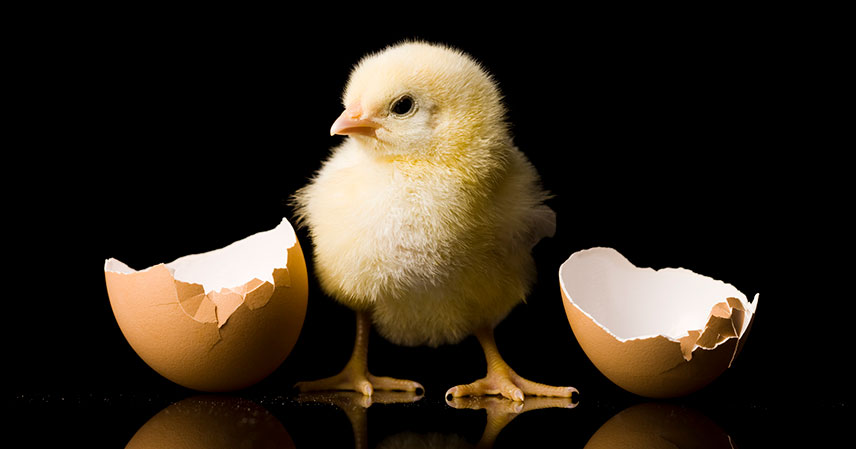
Recent groundbreaking research has now added an astonishing twist. It suggests this effect might not be exclusively human. In perhaps the most unexpected finding yet, newly hatched chickens also appear to make these same sound-shape connections. This discovery dramatically reshapes our understanding of cross-modal perception.
Unraveling the Human Connection: A Decades-Long Mystery 🧠
The Bouba/Kiki effect has been a subject of extensive experimental attention. It even boasts a detailed Wikipedia entry, underscoring its significance. Early theories attempted to explain it through phonetic or orthographic similarities to actual words. However, these ideas were largely disproven by subsequent studies.
Crucially, the effect emerged consistently across different languages and alphabets. This robust evidence pointed towards a more fundamental, universal human tendency. Further research found that infants as young as four months old exhibited the same associations. This occurred long before they developed language mastery or spelling skills. These findings strongly suggested a deep-seated cognitive mechanism at play.
Interestingly, attempts to replicate the Bouba/Kiki effect in other primates proved unsuccessful. This led to considerable speculation. Many scientists believed it might be a unique human processing ability. They thought it could even underpin our complex capacity for language acquisition. This perspective positioned the effect as a hallmark of advanced human cognition.
The Unexpected Avian Revelation: Chickens Join the Conversation 🐥
The latest research, involving newly hatched chickens, has introduced a significant challenge to these human-centric theories. The finding is both surprising and profoundly impactful. It suggests that the Bouba/Kiki effect extends beyond our species. This discovery forces a re-evaluation of its fundamental nature.
If chickens, too, associate “bouba” with round shapes, what does this imply? It suggests the underlying mechanism might be far more ancient and basic. It may not be tied to sophisticated human language processing at all. Instead, it could stem from more primitive sensory integration. This challenges the notion of the effect as solely evidence of a unique human cognitive ability.
This avian connection opens up new avenues for exploration. It prompts questions about evolutionary roots and shared cognitive traits across species. The implications for understanding the building blocks of perception are immense. This finding could redefine our understanding of how brains process sensory information.
Beyond Language: Exploring Cross-Modal Correspondences 🌐
The Bouba/Kiki effect is a prime example of cross-modal correspondence. This refers to the way our different senses interact and influence each other. Sounds can evoke visual imagery, and vice versa. This phenomenon is not just a quirky psychological trick. It is a fundamental aspect of how we perceive and make sense of the world.
The chicken study suggests that these correspondences might be hardwired. They could be part of a very basic sensory processing system. This system might be shared across a wider range of species than previously thought. Such an innate ability could offer evolutionary advantages. For example, it might help in quickly recognizing objects or potential threats.
Understanding these deep-seated connections is vital. It sheds light on the origins of cognition itself. It also provides insights into how brains construct a coherent reality from diverse sensory inputs. The Bouba/Kiki effect, now with its avian twist, serves as a powerful testament to the intricate interplay of our senses.
Key Insights from the Bouba/Kiki Effect and Avian Discoveries ✨
- The Bouba/Kiki effect, a cross-modal association between sounds and shapes, is a universal human phenomenon. It has been observed in infants and across diverse linguistic groups.
- Initial theories attributing the effect to phonetic or orthographic similarities were disproven. This indicated a deeper, more fundamental cognitive process was at work.
- The failure to find the effect in other primates previously suggested it might be a unique human trait. This led to speculation about its role in complex language development.
- The groundbreaking discovery that newly hatched chickens exhibit the Bouba/Kiki effect challenges this human-centric view. It suggests the underlying mechanism is more ancient and widespread.
- This avian finding points towards a more basic, potentially innate, form of cross-modal sensory integration. This integration may be shared across various species and not exclusively linked to advanced human cognition.
- Further research is crucial to explore the evolutionary origins and neural mechanisms behind these fundamental sound-shape associations. This could reveal more about the basic architecture of perception across the animal kingdom.
The journey to understand the Bouba/Kiki effect continues to unfold. From human infants to newly hatched chicks, this phenomenon reveals the profound ways our senses connect. It underscores the deep mysteries still present in the study of perception and cognition. This ongoing research promises to deliver even more surprising insights into the shared foundations of intelligent life, showing how our internal character journeys and sensory perceptions are often linked in ways we are only beginning to understand.
Source: From chickens to humans, animals think “bouba” sounds round