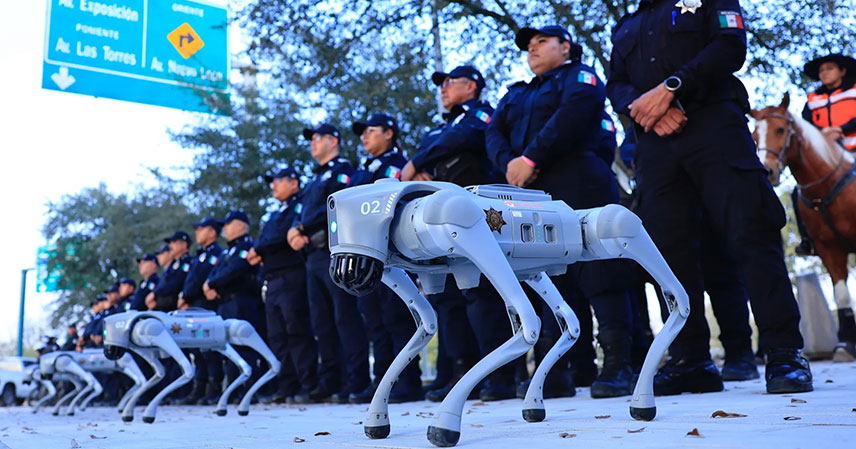
The landscape of public safety is rapidly evolving. Mexico is taking a significant leap forward. Authorities in Guadalupe, Nuevo León, recently unveiled a groundbreaking security measure. They introduced four advanced robot dogs. These units, named “K9-X,” will enhance security at BBVA Stadium. This venue is one of three Mexican hosts for the 2026 World Cup. This move signals a new era for large-scale event management and security protocols.
The deployment of these robotic units is more than just a technological showcase. It represents a strategic investment. It aims to bolster safety for thousands of spectators. It also protects law enforcement personnel. The K9-X units are a critical component of a multi-faceted security strategy. They highlight a growing global trend. Technology is increasingly central to maintaining public order and safety.
Introducing the K9-X Unit: A New Breed of First Responder 🐾
The K9-X robot dogs are designed as specialized first responders. They are not armed. Their primary function is data collection and communication. Each unit integrates sophisticated video cameras. They also feature night vision capabilities. Advanced communication systems are built-in. These tools allow the robots to issue warnings. They can also provide critical instructions during incidents.
Their operational scope is broad. K9-X units deter illegal activity. They detect unusual behavior patterns. They can identify suspicious objects. They also assist in crowd control efforts. When necessary, they immediately alert law enforcement. This system offers a proactive layer of security. It enhances situational awareness for human operators.
It is important to note their operational model. Robot dogs function semi-autonomously. They do not make independent decisions. Operators control their movements. This is similar to handling a drone or a video game. This human oversight is crucial. It ensures accountability and precise deployment. Operators can even issue commands directly through the robot’s system during a crisis situation.
Guadalupe Mayor Héctor García emphasized their protective role. “These K9-X robot dogs are going to support the police with an initial intervention,” he stated. They provide vital video feeds. They can enter high-risk locations first. This protects human officers. The robots intervene in fights. They can also manage intoxicated individuals. This strategy prioritizes officer safety. It combines human expertise with advanced robotic capabilities.
Beyond Deterrence: The Strategic Implications for Large Events ⚽
The deployment of K9-X units at BBVA Stadium is a strategic move. It extends beyond simple deterrence. It showcases a commitment to cutting-edge security. The 2026 World Cup is a global spectacle. Hosting matches demands unparalleled safety measures. These robot dogs are a visible symbol of that commitment. They project an image of robust security. This can reassure both attendees and international organizers.
The K9-X units are part of a larger security ecosystem. Guadalupe plans to use advanced surveillance drones. They will also deploy anti-drone technology. This multi-layered approach creates a comprehensive security net. Drones offer aerial oversight. Anti-drone systems counter potential threats from unauthorized UAVs. This holistic strategy minimizes vulnerabilities. It maximizes the safety footprint around the stadium perimeter and inside. The synergy between these technologies is key.
Their initial intervention capabilities are particularly valuable. Robots can assess dangerous situations. They do so before human officers are exposed. This significantly reduces risk for police. It also provides real-time intelligence. This allows for more informed decision-making. The K9-X unit already saw its first official action. They patrolled the perimeter during a Club de Futbol Monterrey match. This successful debut validates their practical application. They conducted preventive patrols at entrances. They also monitored main gathering areas. This confirms their operational readiness.
The World Cup represents a significant testing ground. BBVA Stadium will host four matches. These include three group stage games. One Round of 16 match is also scheduled. The performance of the K9-X units during these high-profile events will be closely watched. It will offer valuable insights. This will shape future security strategies for major international gatherings. The lessons learned here could influence global practices.
The Global Trend: Technology Reshaping Public Safety 🌍
Mexico’s adoption of robot dogs is not an isolated incident. It reflects a growing global trend. Cities worldwide are integrating advanced technology into public safety. Artificial intelligence (AI) and robotics are transforming policing. They are enhancing surveillance capabilities. This shift promises more efficient and safer environments. It also presents new challenges.
Robotic companions are becoming more common. They assist in various roles. These include hazardous material detection. They aid in search and rescue operations. Security patrols are another key area. The K9-X units exemplify this trend. They offer a non-lethal, highly mobile solution. They complement human efforts. They do not replace them. This collaborative model is likely to become standard.
The balance between security and privacy remains a crucial discussion. High-tech surveillance raises important questions. How is data collected? Who has access to it? What are the retention policies? Authorities must address these concerns transparently. Public trust is paramount. Clear guidelines and ethical frameworks are essential. They ensure responsible technology deployment. This includes units like the K9-X.
The future of public safety will be increasingly digitized. Expect more sophisticated sensors. Anticipate enhanced data analytics. Autonomous and semi-autonomous systems will play larger roles. The K9-X robot dogs in Guadalupe are pioneering this future. They demonstrate a proactive approach. This approach leverages innovation. It seeks to create safer public spaces. This is a significant step forward.
Key Insights ✨
- The K9-X robot dogs are unarmed first responders. They provide critical intelligence and communication. They do not make independent decisions.
- Their deployment at BBVA Stadium for the 2026 World Cup signifies a strategic investment. It enhances security and officer safety. This is part of a broader, multi-layered security plan.
- These units deter illegal activity. They detect unusual behavior. They also assist with crowd control. They act as an initial intervention force. This reduces human risk.
- The K9-X initiative reflects a global movement. Technology is increasingly integrated into public safety. This aims to create safer environments for large events.
- The success of these robot dogs in Mexico will inform future security strategies worldwide. It highlights the evolving role of robotics in urban safety.
Source: Robot Dogs Are on Going on Patrol at the 2026 World Cup in Mexico