
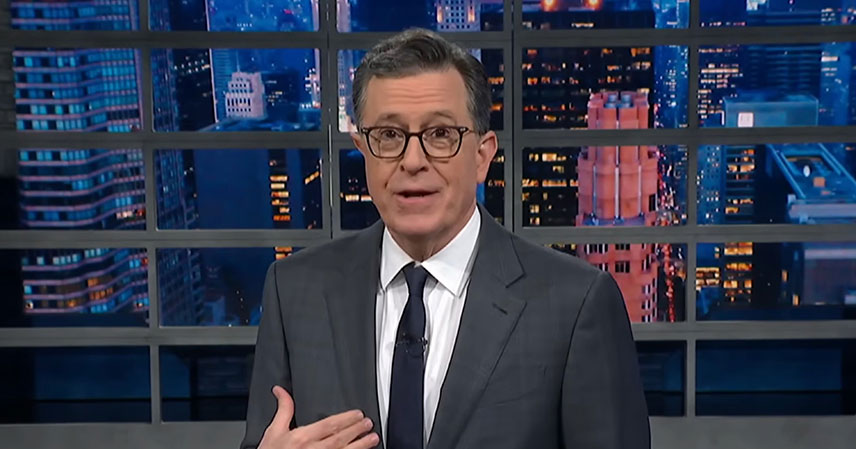
The political landscape is often a complex web of statements and counter-statements. During the Trump administration, this complexity reached new heights, particularly concerning foreign policy. Late-night television hosts, known for their sharp wit and keen observations, frequently shone a spotlight on these intricacies. They particularly focused on the perplexing and often contradictory justifications offered by congressional Republicans for military actions against Iran.
This period was characterized by heightened tensions in the Middle East. The administration’s rhetoric surrounding Iran often shifted dramatically. This created an environment ripe for critical analysis and comedic commentary. The hosts became crucial interpreters, dissecting the ‘Orwellian double-speak’ that seemed to define the official narrative.
The Geopolitical Tightrope: Context of the Iran Strikes 🌍
The Trump administration’s foreign policy towards Iran was marked by extreme pressure. This included the withdrawal from the Joint Comprehensive Plan of Action (JCPOA), also known as the Iran nuclear deal. This move significantly escalated tensions between Washington and Tehran. Economic sanctions were reimposed, severely impacting Iran’s economy.
Military actions, though often presented as defensive, further complicated the situation. Specific strikes were carried out at various points. These actions were frequently met with a mix of alarm and support globally. Domestically, they sparked heated debates about their legality and strategic wisdom. Each incident required public explanation, leading to a flurry of statements from various officials.
The stated goals behind these actions varied. Sometimes they were described as deterrents. Other times, they were framed as responses to specific provocations. This lack of a consistent, clear message laid the groundwork for the contradictory rhetoric that late-night hosts would later satirize. The public struggled to grasp the true objectives amidst the shifting narrative.
Unpacking the “Orwellian Double-Speak” 🤔
Congressional Republicans often found themselves in a difficult position. They needed to defend the administration’s actions. However, the justifications provided were frequently inconsistent. This led to what many observers, including late-night comedians, termed “Orwellian double-speak.” The term refers to language that deliberately obscures, disguises, distorts, or reverses the meaning of words.
For example, some officials would claim that military strikes were a form of “de-escalation.” This assertion directly contradicted the very nature of military engagement. Others would argue that aggressive actions were necessary for “stability.” Such statements created a logical paradox for critical thinkers. The hosts highlighted these semantic gymnastics with precision.
The most egregious examples often involved attempts to reframe offensive actions as defensive. They tried to portray increasing aggression as a path to peace. This rhetorical strategy aimed to control the public narrative. However, its inherent contradictions were too stark to ignore. Late-night comedians excelled at exposing these linguistic manipulations, often to great comedic effect.
They pointed out how terms like ‘restraint’ were used to describe bombings. They noted how ‘deterrence’ was invoked even as tensions visibly escalated. This consistent pattern of contradictory messaging became a hallmark of the administration’s approach. It demonstrated a willingness to redefine reality through language.
The Impact on Public Discourse and Accountability 🗣️
The prevalence of confusing and contradictory rhetoric has significant implications. It erodes public trust in government institutions. When official statements lack coherence, citizens struggle to understand policy. This makes informed public debate nearly impossible. The ability to hold leaders accountable for their decisions is severely hampered.
Foreign policy, by its nature, is complex. However, clear communication is paramount. Ambiguous language can create dangerous misunderstandings both domestically and internationally. It can embolden adversaries or confuse allies. The consistent blurring of lines between truth and spin makes it difficult for the public to discern genuine threats or legitimate actions.
Late-night hosts, through their comedic lens, played a vital role. They acted as a crucial check on power. By highlighting the absurdities and inconsistencies, they encouraged critical thinking. They provided a space for processing difficult information. Their humor often served as a wake-up call, urging viewers to question official narratives more deeply. They demonstrated the power of satire in a challenging political climate.
Key Insights from the Rhetorical Battleground ✨
- The danger of linguistic manipulation: Conflicting rhetoric can obscure intent and mislead the public on critical foreign policy matters.
- Erosion of public trust: Inconsistent official statements can severely damage public confidence in government transparency and accountability.
- The vital role of media scrutiny: Late-night comedy and journalism serve as essential checks, exposing contradictions and prompting deeper public analysis.
- Challenges to informed debate: When facts are fluid and language is weaponized, it becomes incredibly difficult for citizens to engage in meaningful political discourse.
The era of conflicting justifications for military action against Iran offers a powerful lesson. It underscores the importance of clear, consistent communication from government officials. The public deserves transparency, especially when matters of war and peace are at stake. The scrutiny provided by late-night hosts, while comedic, served a serious purpose. Their ability to distill complex political doublespeak into understandable terms was invaluable. It reminded everyone of the ongoing need for vigilance, especially when geopolitics meets conspiracy theories in high-level discourse. Citizens must always critically evaluate the narratives presented by those in power.