
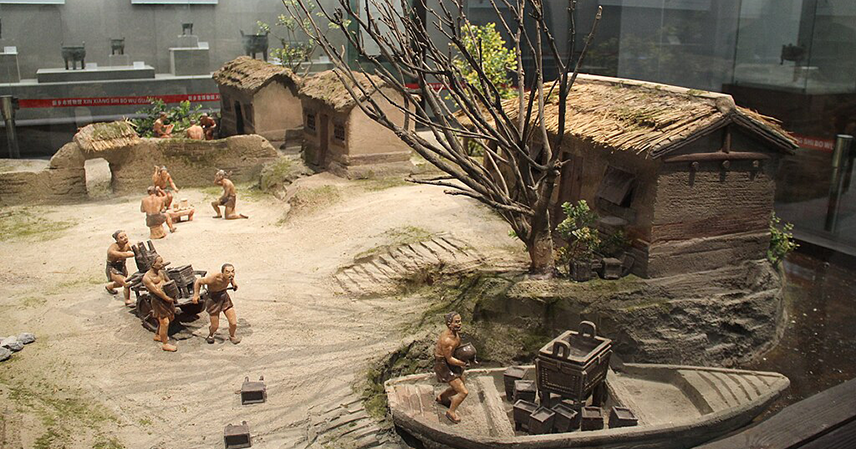
Three millennia ago, the heartland of ancient Chinese civilization faced a relentless onslaught of devastating floods. These catastrophic events, now linked to warmer Pacific Ocean waters, profoundly impacted the Shang Dynasty. A groundbreaking study connects archaeological evidence with meteorological phenomena, offering a stark reminder. It highlights the long-term consequences of climatic shifts.
Researchers from Nanjing University, led by meteorologist Ke Ding, have meticulously pieced together this ancient puzzle. They combined insights from various disciplines. Their findings bridge 3,000 years of history and science. This interdisciplinary approach reveals a powerful story. It speaks to the deep connection between global climate patterns and regional environmental disasters.
The Cradle of Civilization Under Siege: Shang Dynasty and the Deluge 📜
Around 3,000 years ago, central China was a vibrant hub of human ingenuity. The Shang Dynasty flourished in the Yellow River Valley. This period saw the birth of China’s first written language. It also witnessed complex societal structures. Their capital, Yinxu, was a center of power and ritual. Thousands were sacrificed in elaborate ceremonies there.
Simultaneously, the Shanxingdui culture thrived on the Chengdu Plain. They built impressive walled cities. Their artisans created magnificent bronze heads and gold foil masks. These artifacts were often buried in vast sacrificial pits. Both civilizations represented peak cultural achievements for their time.
The people of the Shang Dynasty likely struggled to comprehend the true cause of the massive floods. These weren’t just ordinary seasonal inundations. They were extreme events. The sheer scale and frequency of these disasters were unprecedented. Their understanding of the world was limited by their era’s scientific knowledge.
Archaeological evidence tells a compelling story. Abandoned settlements provide silent testimony. Oracle bones, inscribed with early Chinese writing, hint at desperate pleas and records of hardship. These ancient records are invaluable. They offer a window into the lived experience of a civilization battling environmental catastrophe. The physical remnants and written accounts paint a picture of immense suffering and societal disruption.
Connecting the Climatic Dots: Typhoons and Pacific Cycles 🌀
The recent study skillfully connects these historical events to distant climatic forces. It reveals that the destructive floods were likely caused by intense typhoons. These powerful storms battered the southern Chinese coast. They unleashed tremendous rainfall hundreds of kilometers inland. This remote impact was previously unimaginable to ancient inhabitants.
What fueled the intensity of these ancient typhoons? The research points to a significant shift in temperature cycles over the Pacific Ocean. Thousands of kilometers to the south and east, ocean conditions were changing. Warmer Pacific waters provided more energy. This extra energy intensified the typhoons dramatically. It turned powerful storms into catastrophic events.
Meteorologist Ke Ding and his team meticulously linked three distinct lines of evidence. First, they analyzed paleoclimate data. This data revealed past Pacific Ocean temperature anomalies. Second, they examined archaeological records. These included flood deposits and settlement patterns. Third, they utilized modern meteorological modeling. This helped simulate ancient storm tracks and rainfall.
This scientific triangulation is crucial. It allowed researchers to establish a concrete link. They connected distant ocean warming to devastating regional floods. The study highlights the interconnectedness of Earth’s climate systems. Even subtle shifts in one region can trigger profound impacts elsewhere. This sophisticated analysis offers unprecedented clarity on ancient environmental dynamics.
Lessons for a Warming World: A Warning from History ⚠️
The findings from the Shang Dynasty floods offer a powerful historical parallel to our present challenges. Today, humanity faces a rapidly changing climate. Global warming is increasing ocean temperatures. This trend is expected to fuel more intense tropical storms and typhoons. Coastal regions and river basins worldwide are increasingly vulnerable.
The ancient Chinese experience serves as a stark warning. Even civilizations with advanced social structures can be severely impacted by extreme weather. Their ability to adapt was tested to its limits. Modern societies, with our technological advantages, must heed this lesson. We must prepare for similar or even greater challenges.
Understanding past climate events is essential for future preparedness. This study underscores the importance of interdisciplinary research, combining history, archaeology, and climate science. Such integrated knowledge helps us anticipate and mitigate future risks, much like understanding the biological mechanisms of adaptation helps us predict species vulnerability. Proactive measures are crucial for protecting vulnerable populations and infrastructure. The story of the Shang Dynasty reminds us that environmental shifts can reshape entire civilizations.
Key Insights ✨
- Ancient Climate Link: Devastating floods in Shang Dynasty China were likely driven by intense typhoons, fueled by warmer Pacific Ocean waters.
- Interdisciplinary Research: The study successfully connected archaeological evidence (oracle bones, abandoned settlements) with paleoclimate data and meteorological modeling.
- Historical Warning: The Shang Dynasty’s struggle with climate-driven disasters offers a critical historical lesson for modern societies facing global warming and increased extreme weather events.
- Global Interconnectedness: Shifts in distant ocean temperatures can have profound and catastrophic impacts on human civilizations hundreds or thousands of kilometers away.
Source: An unlikely set of clues helps reconstruct ancient Chinese disasters