
Washington, D.C., recently witnessed an extraordinary convergence. The MAHA Institute, known for promoting highly unconventional and often unscientific viewpoints, hosted a significant event. Leaders from the National Institutes of Health (NIH), one of the world’s most well-funded scientific bodies, were in attendance. This meeting defied conventional expectations.
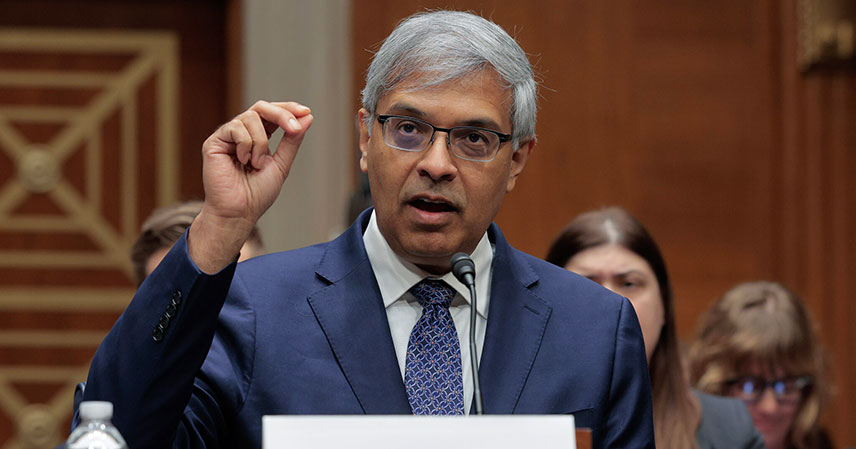
Instead of facing criticism or skepticism, Jay Bhattacharya, a prominent figure associated with NIH, received a hero’s welcome. The audience greeted him with a partial standing ovation. This reception immediately signaled the unusual nature of the gathering. It highlighted a potential shift in the discourse surrounding public health and scientific authority.
The Unlikely Embrace: Bridging Ideological Divides 🌉
The MAHA Institute, whose acronym ‘Make America Healthy Again’ clearly signals its political leanings, has historically championed ideas that diverge significantly from mainstream scientific consensus. Its very foundation rests on challenging established scientific narratives. Therefore, the presence and positive reception of NIH leadership, particularly Jay Bhattacharya, was a moment of profound significance. It suggested a deliberate outreach or an unexpected alignment of interests.
Bhattacharya’s warm reception underscored a deeper sentiment among the audience. It reflected a desire for alternative voices within the scientific community. This event was not merely a dialogue; it was a demonstration of a shared discontent. The optics of this alliance are crucial. They hint at a growing chasm between parts of the public and traditional scientific institutions. This situation demands careful examination and understanding.
Unpacking the Common Ground: A Shared Discontent 🗣️
Over five hours, the NIH leadership and MAHA Institute moderators explored numerous areas of agreement. A primary point of unity was a profound dissatisfaction with pandemic-era decisions. This likely encompassed policies like lockdowns, mask mandates, and vaccine strategies. Many felt these decisions were either misguided or overly restrictive. This shared grievance provided a strong foundation for commonality.
Another critical area of consensus focused on the perceived failures of the healthcare system. Discussions touched upon rising costs, access issues, and the system’s focus on treatment over prevention. Furthermore, the idea of leveraging diet to resolve health issues resonated strongly. This concept often aligns with alternative health movements. It suggests a belief in individual agency over systemic medical intervention. This shared perspective revealed a widespread erosion of trust in established scientific bodies. Both sides acknowledged that science had lost the public’s confidence. This recognition created a powerful bond. Messages were carefully crafted to connect with the audience’s existing beliefs.
The “Second Scientific Revolution”: A Vision or a Vulnerability? 🔭
Jay Bhattacharya articulated his primary objective as initiating a “second scientific revolution.” This ambitious project suggests a fundamental re-evaluation of scientific principles, methodologies, or perhaps even its governance. It implies a desire to challenge the current scientific paradigm. The exact nature of this revolution remains to be fully defined. However, its stated goal is to restore trust and perhaps re-center scientific inquiry.
The reason for MAHA’s pivotal role became clear. It is likely one of the few political constituencies offering substantial support for Bhattacharya’s vision. This alignment is revealing. It indicates that the proposed “revolution” might find its strongest backing among groups already critical of mainstream science. This raises important questions about the direction and credibility of such a movement. Will this alliance strengthen or weaken the broader scientific enterprise? The partnership could either democratize scientific discourse or further polarize it. The implications for public health are significant and far-reaching. It signals a potential reshaping of how scientific authority is perceived and exercised.
Key Insights: What This Event Tells Us About the Future of Public Health 💡
- Erosion of Trust: The event underscored a widespread and profound loss of public trust in scientific institutions. This sentiment is a critical challenge for public health going forward.
- Ideological Alignment: It highlighted an unexpected ideological alignment between elements of mainstream science leadership and groups traditionally outside it. This suggests a search for new political constituencies.
- Rethinking Scientific Authority: Jay Bhattacharya’s call for a “second scientific revolution” indicates a significant internal challenge to established scientific norms. It proposes a fundamental re-evaluation of current practices.
- Fragmented Discourse: The common ground found between such disparate entities points to a deeply fragmented public discourse on science and health. Bridging these divides will be crucial for future public health initiatives.
- Political Implications: This event has clear political implications, signaling a potential shift in how scientific issues are framed and debated in the political arena. It emphasizes the politicization of science.
Source: NIH head, still angry about COVID, wants a second scientific revolution