
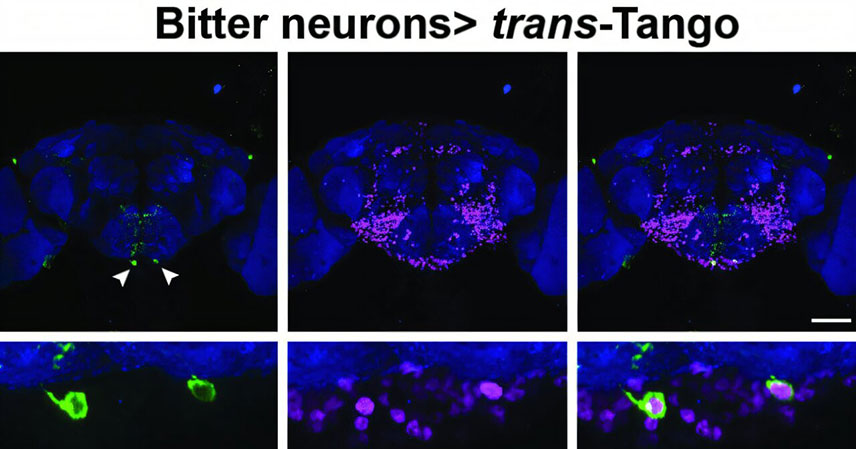
For many creatures, the sense of taste is not merely about enjoyment. It is a fundamental tool for survival. This is profoundly true for the humble fruit fly. This tiny insect, scientifically known as Drosophila melanogaster, relies on its acute sense of taste for its very existence. Its ability to discern what is nutritious from what is harmful is remarkably sophisticated. Researchers continue to uncover the intricate mechanisms behind this crucial sensory system.
The fruit fly’s world revolves around finding food and avoiding danger. Taste acts as its primary guide in this quest. It helps the fly make instantaneous decisions. These choices often spell the difference between thriving and perishing. Understanding this system offers valuable insights into basic biological processes.
A Palate Beyond the Mouth: Distributed Taste Receptors 🔬
One of the most striking aspects of the fruit fly’s taste system is its widespread distribution. Unlike humans, whose taste buds are primarily on the tongue, the fruit fly possesses taste organs throughout its entire body. These critical sensors are not limited to its mouthpiece. They are also found on its legs, abdomen, and even the margins of its wings. This unique anatomical arrangement provides the fly with an unparalleled sensory network.
Imagine landing on a surface and instantly knowing its chemical composition. This is precisely what a fruit fly experiences. When it lands on a ripe or rotting fruit, its legs immediately receive vital information. This immediate feedback allows for rapid assessment. The fly doesn’t need to ingest the substance to determine its safety. This distributed sensing dramatically reduces the time spent on potentially dangerous substances. It enhances its efficiency in finding suitable food sources.
These external taste organs are highly sensitive. They are equipped with specialized neurons. These neurons detect specific chemical compounds. This integrated sensory input creates a comprehensive “taste map” of its environment. It allows the fruit fly to navigate its world with incredible precision. This system is a marvel of evolutionary adaptation.
The Evolutionary Imperative: Sweet for Sustenance, Bitter for Survival 🍎
The core function of the fruit fly’s taste system boils down to two primary distinctions: sweetness and bitterness. These two tastes represent opposing forces in the fly’s survival strategy. Sweetness acts as an immediate indicator of a “caloric payday.” It signals the presence of sugars and other energy-rich compounds. These are essential for the fly’s metabolism and reproduction. Upon detecting sweetness, the fly is cued to feed. It quickly begins to consume the nourishing substance.
Conversely, bitterness serves as a critical warning signal. It prompts the fruit fly to move away from the potentially toxic substance. Many plant toxins, alkaloids, and decaying compounds taste bitter. Evolution has hardwired this response. Avoiding bitter substances is paramount for the fly’s health. Ingesting even small amounts of certain toxins can be lethal. Therefore, a quick and decisive rejection of bitter tastes is a powerful survival mechanism.
This sweet-or-bitter dichotomy is surprisingly simple yet incredibly effective. It allows the fly to make rapid, life-saving decisions. The speed of this processing is crucial in a competitive environment. It minimizes exposure to harm. It also maximizes opportunities for nutrient intake. This elegant system highlights the fundamental role of taste in shaping feeding behaviors across the animal kingdom.
Beyond the Fly: Why Drosophila Taste Matters to Science 🧪
The study of the fruit fly’s taste system extends far beyond understanding this specific insect. Drosophila melanogaster is a renowned model organism in scientific research. Its relatively simple genetics, short life cycle, and well-mapped nervous system make it ideal for studying fundamental biological processes. Research into fruit fly taste perception provides invaluable insights into sensory biology in general. It helps us understand how any organism perceives its environment.
Scientists use fruit flies to explore the genetic basis of taste. They investigate the neural pathways involved in sensory processing. This research can shed light on how taste preferences are formed. It can also reveal how they are altered by internal states like hunger or thirst. Understanding these basic mechanisms in a fruit fly can have broader implications. It might inform our understanding of human taste disorders. It could even contribute to strategies for pest control.
Moreover, the insights gained from Drosophila research can inform neuroscience. It helps us understand how sensory information is integrated into behavioral decisions. The fly’s efficient sweet/bitter discrimination system offers a clear model. It shows how simple sensory inputs lead to complex survival behaviors. This ongoing research continues to unlock secrets about the universal language of taste.
Key Insights into Fruit Fly Taste Perception 💡
- Taste is paramount for fruit fly survival, guiding its feeding and avoidance behaviors.
- Fruit flies possess widespread taste organs, located not only in their mouthparts but also on their legs, abdomen, and wing margins.
- This distributed sensory system allows for instantaneous detection of chemical cues upon contact with a surface.
- The fly’s taste system primarily discriminates between sweetness (indicating caloric value) and bitterness (signaling potential toxins).
- Drosophila melanogaster serves as a crucial model organism for understanding fundamental principles of sensory biology and neuroscience.
In conclusion, the fruit fly’s taste system is a testament to evolutionary efficiency. Its distributed sensors and clear sweet/bitter discrimination ensure its survival. This tiny creature offers a powerful lens, much like the science of homeothermy shows how life adapts to environmental extremes. It helps us explore the complex world of sensory perception. The ongoing research provides foundational knowledge that impacts our understanding of life itself.
Source: A neuron pair in fruit flies that makes life or death decisions