
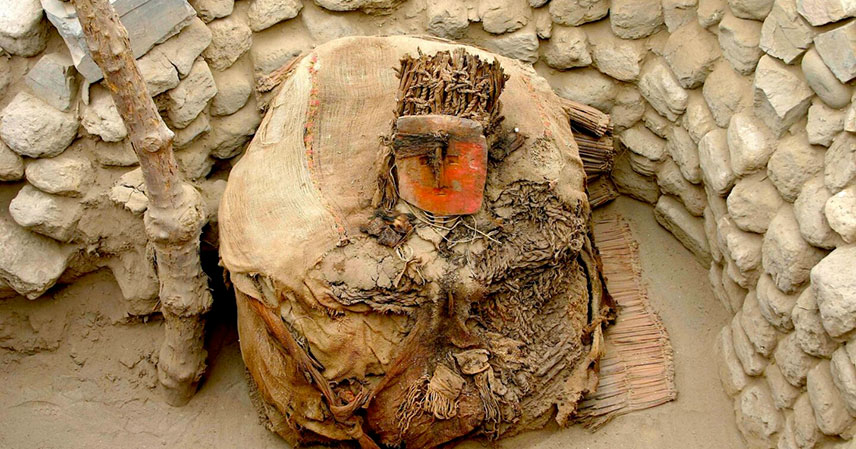
Centuries before the majestic Inca Empire rose to dominate the Andean landscape, a lesser-known kingdom on Peru’s central coast was already demonstrating remarkable sophistication. The Ychsma people, dwelling in what is now the Lima region, cultivated an extensive trade network. This network was so advanced it could transport live parrots hundreds of miles. These vibrant birds journeyed from the dense Amazon rainforest, across the formidable Andes mountains, to the Pacific coast.
This groundbreaking discovery reshapes our understanding of pre-Inca civilizations. It highlights their complex social structures and impressive logistical capabilities. It suggests a level of interregional connection previously underestimated for this period. The Ychsma’s mastery of long-distance trade is truly astonishing.
The Ychsma’s Sophisticated Supply Chain 🌐
The evidence supporting this extraordinary trade comes from a Ychsma noble’s tomb. Researchers studied feathers from a ceremonial headdress, dating between 1100 and 1400 CE. This period directly precedes the Inca’s ascendancy. The feathers, remarkably, still retained their brilliant blue, yellow, and green hues after centuries. This preservation provided a unique window into the past.
Conservation geneticist George Olah and his team at Australian National University led the research. Their analysis involved both DNA sequencing and chemical isotope examination. These scientific methods revealed crucial insights. The parrots originated in the wild Amazonian interior, far beyond the Andes. However, they were kept in captivity somewhere along the Peruvian coast. This implies a deliberate and sustained effort to capture, transport, and maintain these exotic birds.
Importing live parrots across such vast and challenging terrain was no small feat. It demanded an incredibly well-organized infrastructure. The Ychsma must have possessed a far-reaching network. This network likely spanned at least half a continent. It involved intricate logistics, safe passage, and probably established trade agreements. This level of organization speaks volumes about their societal complexity.
Parrots as Symbols of Power and Prestige 🦜
Why go to such extreme lengths for parrots? The answer lies in their symbolic value. In many ancient cultures, exotic animals and rare materials were powerful symbols of status. They represented wealth, influence, and connection to distant, mysterious lands. The vibrant plumage of Amazonian parrots would have been a highly coveted commodity.
These birds were not merely pets. They were living trophies, displayed in headdresses and likely in noble courts. Their presence signified the owner’s ability to command resources. It also showcased their access to goods from remote regions. This demonstrates a clear understanding of conspicuous consumption. The investment of resources required for their acquisition was immense. This further underscores their importance to the Ychsma elite. They were a testament to the kingdom’s power and reach.
The Ychsma’s desire for these specific birds suggests a deep cultural appreciation. It extends beyond simple aesthetic pleasure. Parrots might have held spiritual significance. They could have been associated with deities or sacred rituals. Their bright colors and ability to mimic sounds could have been seen as supernatural. This adds another layer to their immense value.
Broader Implications for Pre-Inca Andean Societies 🗺️
This discovery forces a re-evaluation of pre-Inca societal complexity. It challenges the notion that extensive interregional trade only flourished under the Inca. The Ychsma example proves that sophisticated networks existed much earlier. These networks connected diverse ecological zones. They linked the Pacific coast, the Andean highlands, and the Amazon basin.
The scale of this trade suggests a significant level of political stability. It also points to effective diplomatic relations. The Ychsma must have negotiated passage through various territories. They likely traded with different ethnic groups along the route. This points to a complex web of interactions. It highlights the dynamic nature of ancient Andean societies.
The Amazon rainforest, often seen as a barrier, was clearly a source of valuable goods. Its resources were integrated into coastal economies. This challenges geographical determinism in understanding ancient trade. It shows how resourceful ancient peoples overcame natural obstacles. Their ingenuity created vital economic corridors. The Ychsma’s parrot pipeline is a prime example of this.
Key Insights ✨
- Pre-Inca Sophistication: The Ychsma kingdom had a highly advanced trade network centuries before the Inca Empire.
- Trans-Andean Commerce: Live parrots were imported from the Amazon across the Andes, demonstrating incredible logistical capabilities.
- Symbolic Value: Exotic parrots served as powerful status symbols for the Ychsma nobility, signifying wealth and influence.
- Redrawing Ancient Maps: This discovery highlights extensive interregional connections and trade routes in ancient Peru, linking diverse ecosystems.
- Scientific Breakthroughs: DNA and isotope analysis provided irrefutable evidence of the parrots’ origin and captivity, showcasing modern archaeology’s power.
The Ychsma kingdom’s parrot trade is more than just an interesting anecdote. It is a profound testament to ancient ingenuity. It reveals the intricate connections that bound together diverse regions of pre-Columbian Peru. This research enriches our understanding of a vibrant past, much like our discovery of how environmental shifts shaped ancient China. It reminds us that history is always being rewritten, one feather at a time.
Source: Centuries before the Inca, Peru’s wealthy imported parrots from afar