
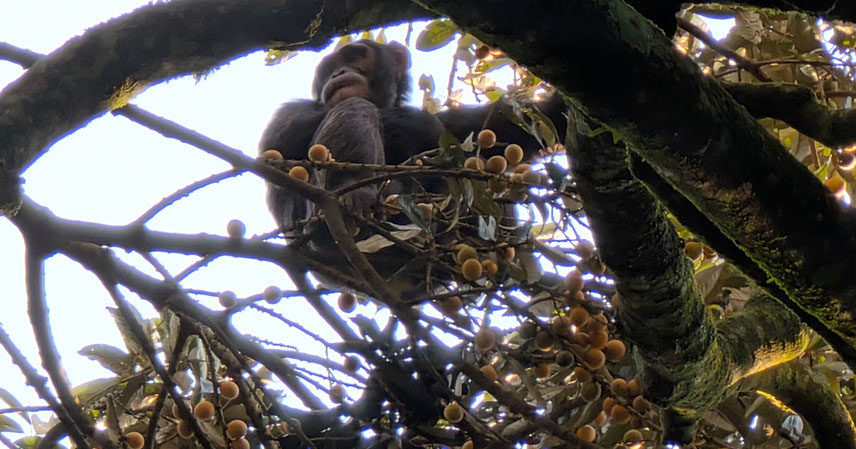
A groundbreaking new study has reignited an old debate. It concerns the human attraction to alcohol. Researchers found compelling evidence in chimpanzee urine. This suggests our primate relatives regularly consume fermented fruit.
This discovery offers crucial support for a fascinating evolutionary theory. It is known as the “drunken monkey hypothesis.” The paper details high levels of alcohol byproduct in chimp urine. This finding strongly indicates a consistent dietary intake of naturally fermented fruits.
The implications are profound. They potentially trace our own complex relationship with alcohol back millions of years. This research, published in Biology Letters, adds significant weight to the discussion.
The Drunken Monkey Hypothesis Revisited 🐒
The “drunken monkey hypothesis” first gained prominence in 2014. University of California, Berkeley (UCB) biologist Robert Dudley introduced it. He authored a book: The Drunken Monkey: Why We Drink and Abuse Alcohol. His work posited a controversial idea.
Dudley suggested that human predisposition for alcohol dates back 18 million years. This period marks the evolutionary origin of the great apes. He theorized that social communication and food sharing evolved. This helped locate fruit, especially from a distance.
Early skepticism met this theory. Many scientists argued against it. They believed chimpanzees and other primates did not consume fermented fruit or nectar. This new research directly challenges that long-held belief.
The core idea is simple yet powerful. Our ancestors needed calories. They would have sought out ripe fruit. Overripe fruit naturally ferments. This process produces ethanol. Primates consuming such fruit gained a caloric advantage. This advantage could have driven an evolutionary preference for alcohol’s smell and taste.
New Evidence from the Wild 🌿
The tide of scientific opinion has begun to turn. Reports of primates consuming fermented substances have increased. These observations span the last two decades. Earlier this year, compelling visual evidence emerged.
Researchers captured wild chimpanzees on camera. They were observed sharing fermented African breadfruit. This fruit contained measurable alcoholic content. This data marked a significant milestone. It was the first direct evidence of nonhuman great apes sharing alcoholic foods in their natural habitat.
Scientists meticulously measured the alcohol content of fallen fruit. They used a portable breathalyzer. The results were striking. Almost 90 percent of the fruit tested contained some ethanol. The ripest fruits showed the highest levels.
Specifically, the ripest breadfruit reached 0.61 percent ABV (alcohol by volume). For context, this is comparable to a very weak beer. However, the sheer volume consumed by these primates could lead to significant alcohol intake.
The consistent presence of alcohol byproducts in chimp urine further solidifies these observations. It suggests regular, rather than incidental, consumption. This pattern indicates an adaptive behavior. It is not just a random occurrence.
The findings in Biology Letters provide a crucial biochemical link. Detecting alcohol metabolites in urine confirms systemic absorption. It moves beyond mere observation. This scientific rigor adds substantial weight to the argument. Primates are indeed consuming and metabolizing alcohol.
Evolutionary Implications for Humans 🧠
This growing body of evidence has profound implications. It helps us understand human behavior. If our great ape ancestors preferred fermented fruit, it could explain our innate attraction to alcohol. This isn’t about promoting alcohol abuse. Instead, it offers a deep evolutionary context for a complex human trait.
The ability to metabolize alcohol efficiently was advantageous. It allowed access to a rich source of calories. Fermented fruit is often softer. It is also easier to digest. It provides vital energy. This energy could have been crucial for survival and reproduction.
Therefore, a genetic predisposition for ethanol tolerance might have been selected for. This process occurred over millennia. Understanding this evolutionary backdrop informs modern perspectives. It helps us understand alcohol’s pervasive nature across human cultures.
It may also shed light on the mechanisms behind alcohol abuse. Our ancient drive for caloric intake was once a survival tool. Now, it could contribute to modern health challenges. This research bridges biology, anthropology, and public health discussions. Further research will undoubtedly explore genetic components. Scientists may investigate specific enzymes responsible for alcohol metabolism in primates. Comparing these to human enzymes could reveal shared evolutionary pathways, providing a different perspective on how long-term exposure and biological factors shape our modern health risks. This deeper understanding is key to unlocking the full story.
Key Insights from the Primate Pantry 💡
- Chimp Urine Confirms Alcohol Intake: High levels of alcohol byproducts in chimpanzee urine indicate regular consumption of fermented fruits, providing strong biochemical evidence.
- Drunken Monkey Hypothesis Strengthened: This new data significantly bolsters Robert Dudley’s theory that human attraction to alcohol has ancient evolutionary roots in great ape diets.
- Observational Evidence Mounts: Previous reports of wild chimpanzees sharing fermented breadfruit (up to 0.61% ABV) align with the latest findings, showing consistent primate interaction with ethanol.
- Evolutionary Advantage: Consuming fermented fruit likely offered a caloric advantage to ancient primates. This could have driven the selection for traits that enabled efficient alcohol metabolism and preference.
- Human Connection: The findings provide a biological and evolutionary framework for understanding the widespread human fondness for, and sometimes struggle with, alcohol across cultures.
Source: Boozy chimps fail urine test, confirm hotly debated theory