
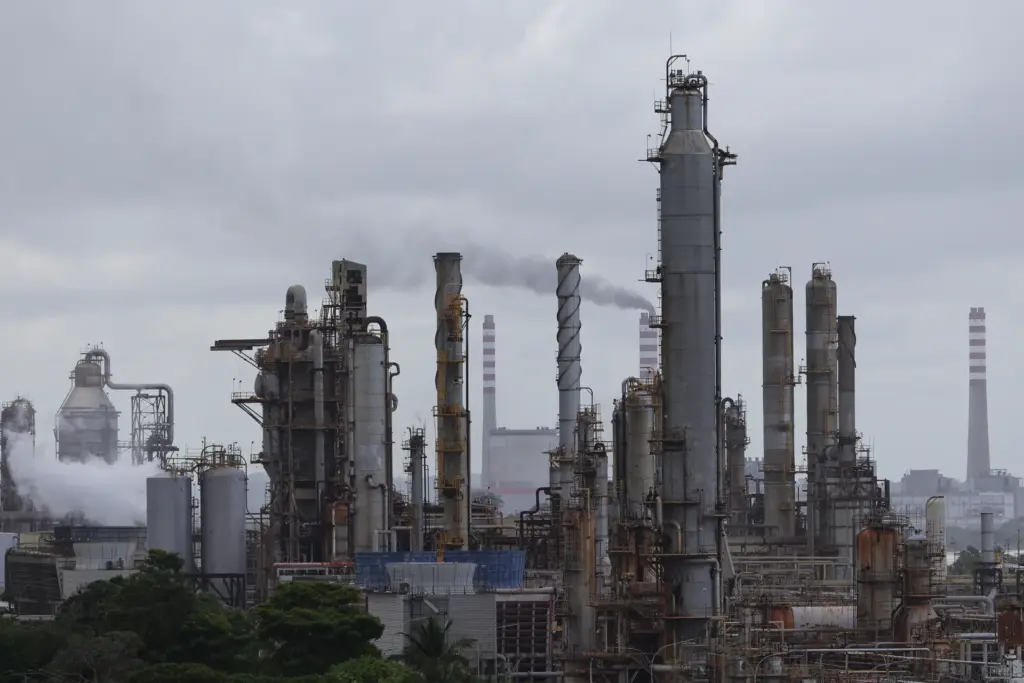
Following the dramatic capture of Venezuelan president Nicolás Maduro and his wife, President Donald Trump articulated a clear vision for Venezuela’s future. His plan positions the United States to profit significantly from the nation’s vast oil reserves. “We’re going to have our very large United States oil companies—the biggest anywhere in the world—go in, spend billions of dollars, fix the badly broken infrastructure, the oil infrastructure,” Trump told reporters. This statement underscores a long-held philosophy regarding resource control and national interest.
However, experts are quick to caution. They highlight a significant disconnect between this ambitious political rhetoric and the complex realities of the global oil market. Factors like fluctuating international oil prices and persistent questions of long-term stability within Venezuela itself pose immense challenges. These realities are likely to make an immediate “oil revolution” far more difficult to execute than the president suggests.
Trump’s Vision vs. Market Realities: A Deep Dive into the Discrepancy 🛢️
President Trump’s pronouncements reveal a consistent approach to energy geopolitics. He envisions American oil giants, renowned for their scale and engineering prowess, pouring billions into Venezuela. The goal is to revitalize its dilapidated oil infrastructure. This perspective aligns perfectly with his “drill, baby, drill” philosophy, which champions aggressive domestic and international resource extraction.
This thinking is not new. Years before his presidency, Trump criticized the Iraq war. His primary complaint was that the U.S. failed to “take the oil” from the region. He believed this oil could have “reimbursed ourselves” for the conflict. This historical context illuminates his current stance on Venezuela.
Yet, industry analysts paint a different picture. Lorne Stockman, an analyst with Oil Change International, a clean energy and fossil fuels research and advocacy organization, points to a “huge disconnect.” He notes the gap between the Trump administration’s outlook and the actual desires and operational realities of American oil companies. These companies prioritize stable investment environments and predictable returns. They face complex financial and logistical hurdles in volatile regions.
Venezuela’s Oil Saga: From Reserves to Decline 📉
Venezuela possesses some of the world’s largest proven oil reserves. This natural endowment should theoretically make it a global energy powerhouse. However, its production trajectory tells a story of significant decline. Output has plummeted dramatically since the mid-1990s.
A pivotal moment was President Hugo Chávez’s nationalization of much of the oil industry. This policy, implemented in the late 1990s, aimed to consolidate state control over resources. While ideologically driven, it led to underinvestment, mismanagement, and a brain drain within the industry. Production, once exceeding 3 million barrels per day (bpd) in the late 1990s, had fallen to a mere 1.3 million bpd by 2018. To put this in perspective, the United States, the world’s top crude oil producer, averaged 21.7 million bpd in 2023.
Furthermore, sanctions imposed on Venezuela during the first Trump administration exacerbated this decline. These measures severely restricted the country’s ability to sell its oil internationally and access crucial equipment and financing. The combined effect of nationalization, mismanagement, and sanctions has left Venezuela’s oil infrastructure in a dire state. Revitalizing it would require not just billions of dollars, but also extensive technical expertise and a long-term commitment. This commitment is difficult to secure in a politically unstable nation.
Geopolitical Chess and Economic Hurdles for US Companies ♟️
Rory Johnston, a Canadian oil market researcher, offers a compelling analogy. He suggests President Trump views energy geopolitics “almost like the world is a Settlers of Catan board.” In this simplified view, the capture of a leader like Maduro automatically grants control over resources. Johnston believes Trump genuinely holds this perspective. However, he acknowledges that this perspective does not align with reality. It serves as an “important frame” for understanding his policy drivers.
For major U.S. oil companies, the decision to invest in Venezuela is far from a simple political directive. They operate within a complex global market. Their primary drivers are profitability, risk management, and shareholder value. Investing billions in a nation with a history of nationalization and ongoing political instability presents significant risks. These include potential expropriation, currency controls, and operational disruptions.
Moreover, the global energy landscape is evolving. Many major oil companies are increasingly mindful of Environmental, Social, and Governance (ESG) factors. Investing heavily in a politically fraught nation with a questionable human rights record could attract significant scrutiny. This scrutiny might deter investors and damage corporate reputations. The economic hurdles are immense. The political landscape is even more challenging. Stable governance, clear legal frameworks, and international cooperation are prerequisites for any successful large-scale energy investment.
Key Insights ✨
- President Trump’s vision for U.S. oil companies in Venezuela is based on a simplified view of complex geopolitical and economic realities.
- Venezuela’s oil infrastructure is severely degraded due to decades of underinvestment, nationalization, and international sanctions.
- Major U.S. oil companies prioritize stable investment climates, predictable returns, and robust risk management over politically driven directives.
- Revitalizing Venezuela’s oil sector demands massive, long-term capital investment, advanced technical expertise, and, crucially, sustained political stability.
- The global oil market, international prices, and ESG considerations significantly influence corporate investment decisions, often outweighing political pressure.
In conclusion, while President Trump’s ambition to leverage Venezuelan oil for U.S. profit is clear, the path forward is fraught with obstacles. The complexities of Venezuela’s political landscape, its historical economic policies, and the pragmatic considerations of global oil companies all stand in the way. Transforming Venezuela into a reliable oil producer requires more than just political will. It demands a profound and sustained commitment to stability, investment, and international collaboration. The “oil revolution” Trump envisions faces a stark reality check from market forces and geopolitical intricacies.
Source: Trump Wants Venezuela’s Oil. Getting It Might Not Be So Simple