
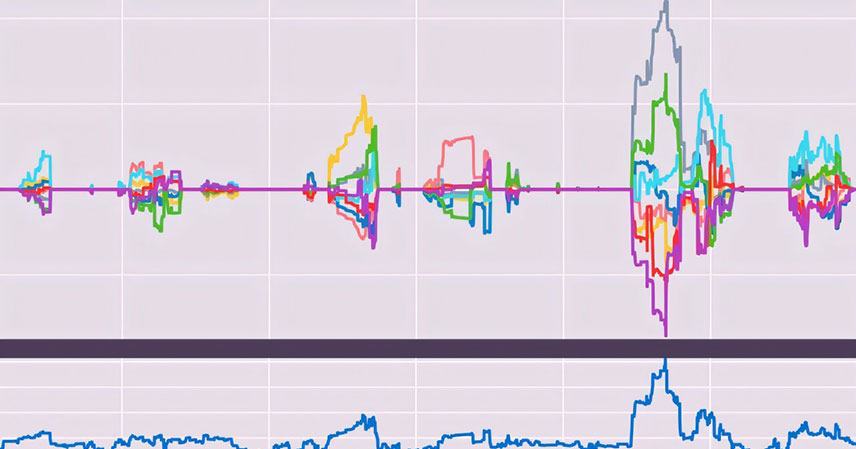
Our brains are incredibly complex information processing machines. Every second, they are bombarded with an overwhelming amount of sensory data. From the gentle hum of the refrigerator to the distant chatter outside, countless stimuli vie for our attention.
The ability to function effectively in this rich environment hinges on a crucial neurological skill: separating signal from noise. This fundamental process allows us to filter out distractions. It helps us to pinpoint what truly matters in a given moment.
The Brain’s Filtering System: A Daily Challenge 🎯
Imagine your brain as a sophisticated control tower. It constantly receives incoming transmissions. To prevent chaos, this tower must expertly prioritize and route essential messages. It must also discard irrelevant ones.
This is precisely what our brains do. They engage in a continuous battle against informational overload. Our capacity to focus, learn, and make decisions relies heavily on this internal filtering system. When this system operates optimally, we can concentrate on a conversation in a crowded room. We can also dedicate our attention to a complex task without significant interruption.
Researchers suggest that this filtering mechanism is not passive. It involves active suppression of competing stimuli. It also includes the enhancement of relevant information. This intricate dance of neural activity underpins our everyday cognitive experiences.
Understanding Attention Disorders: Beyond Simple Distraction 🧩
For individuals with attention disorders, such as Attention-Deficit/Hyperactivity Disorder (ADHD), this sophisticated filtering system faces significant challenges. The breakdown in separating signal from noise is a core aspect of these conditions. It’s far more profound than mere distractibility.
Instead of effortlessly prioritizing information, the brain struggles to inhibit irrelevant inputs. This means that every piece of incoming data can feel equally important. This makes sustained focus incredibly difficult. It can manifest as difficulty concentrating on tasks. It also leads to challenges in following conversations or remembering instructions.
This isn’t a matter of willpower. It’s a neurological difference in how the brain processes information. Understanding this distinction is vital. It shifts the perspective from a personal failing to a neurobiological reality. It underscores the need for appropriate support and strategies.
The Neurobiological Basis of Attention: A Deeper Dive 🔬
Scientific research continues to unravel the complex neural networks involved in attention. Studies often point to specific brain regions. These include the prefrontal cortex, parietal lobe, and basal ganglia. These areas play critical roles in executive functions.
These functions include planning, working memory, and inhibitory control. Disruptions in the connectivity or function of these regions can impair the brain’s filtering capabilities. Neurotransmitters like dopamine and norepinephrine are also deeply implicated. They influence how our brains process reward and attention.
For instance, imbalances in dopamine pathways are often linked to ADHD symptoms. Researchers use advanced imaging techniques. They also employ cognitive tests to explore these intricate relationships. This helps us to better understand the underlying mechanisms of attention disorders.
Implications for Diagnosis, Support, and Everyday Life 💡
A deeper understanding of the signal-from-noise problem has significant implications. It informs more accurate diagnostic criteria for attention disorders. It also guides the development of more effective interventions. For individuals, recognizing this neurological difference can be empowering.
It can lead to tailored educational approaches. It also encourages workplace accommodations. These strategies aim to bolster the brain’s natural filtering abilities. They also help individuals navigate environments that might otherwise be overwhelming. Examples include structured routines, reduced distractions, and specific cognitive training exercises.
Furthermore, this knowledge helps reduce stigma. It fosters greater empathy and understanding. It highlights that attention challenges are not a choice. They are a reflection of how the brain processes the world. This perspective encourages a supportive and adaptive approach.
Key Insights ✨
- Attention disorders involve a fundamental difficulty in the brain’s ability to distinguish relevant information (signal) from irrelevant information (noise).
- This challenge is rooted in complex neurobiological processes, not simply a lack of effort or willpower.
- The brain’s filtering system relies on active suppression of distractions and enhancement of focus.
- Understanding this mechanism is crucial for developing effective diagnostic tools and personalized support strategies.
- Adopting an informed perspective on attention disorders helps to reduce stigma and promotes greater understanding.
Source: Homer1 gene calms the mind and improves attention in mice