
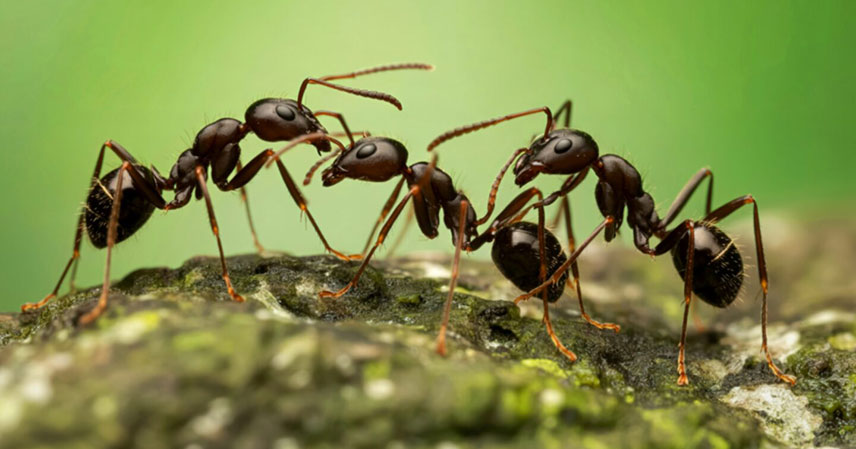
The age-old dilemma of quality versus quantity is a cornerstone of economic theory. It forces tough choices in resource allocation. Now, groundbreaking research reveals this fundamental trade-off is not exclusive to human markets. It profoundly shapes the natural world as well. A collaborative team of British, American, and Japanese researchers has applied this economic principle to biology. Their findings shed new light on the evolutionary path of ants. Ants are undeniably one of Earth’s most successful and widespread groups of organisms.
This pivotal study uncovers a surprising evolutionary strategy. As ant societies grew in size and organizational complexity, they did more than just produce smaller workers. They also evolved to create workers that were, in essence, biologically ‘cheaper’ to produce. This ingenious adaptation allowed ant colonies to scale up their numbers. It enabled them to dominate diverse ecosystems across the globe.
The Evolutionary Riddle of Ant Success 🐜
Ants are a remarkable example of evolutionary triumph. Their colonies can range from a few dozen individuals to millions. They exhibit complex social structures and division of labor. This incredible success has long fascinated scientists. How did these tiny insects achieve such widespread dominance? The new research offers a compelling answer. It points to a sophisticated balancing act between individual worker investment and overall colony efficiency.
The study highlights a critical shift in ant evolution. Early ant societies might have prioritized robust, well-armored individuals. However, as colonies expanded, a new imperative emerged. The focus moved towards maximizing collective output. This meant producing more workers, even if each individual was less ‘expensive’ to build. This strategic pivot allowed for an explosion in colony size. It fostered the intricate social systems we observe today. It truly represents a masterclass in evolutionary economics.
The High Cost of Armor: A Biological Trade-off 🛡️
Insects rely heavily on their exoskeleton. This protective outer layer is called the cuticle. It serves multiple vital functions. The cuticle acts as a strong barrier against predators. It also defends against harmful pathogens. Crucially, it prevents desiccation, or water loss. Furthermore, it provides the essential structural framework for muscle attachment. Without a robust cuticle, an insect cannot survive.
However, this crucial protection comes with a significant biological price tag. Building a strong, durable cuticle requires substantial resources. It demands considerable amounts of nitrogen. It also needs rare and valuable minerals. These include zinc and manganese. These elements are not always readily available in the environment. For an individual insect, skimping on armor can be a death sentence. It leaves them vulnerable to countless threats. Yet, ant evolution found an ingenious workaround. They reduced the individual investment in each worker’s armor. This was done to benefit the colony as a whole. This strategy allowed for more workers to be produced from finite resources.
Implications for Societal Complexity and Resource Allocation 📊
This discovery has profound implications. It helps us understand the drivers of social complexity. By making workers ‘cheaper,’ ant colonies could afford more of them. More workers mean greater collective strength. It allows for specialized tasks and efficient resource gathering. This strategy enabled the evolution of highly organized ant societies. These societies exhibit unparalleled adaptability and resilience. They can tackle challenges far beyond any individual ant’s capability.
The research also offers insights into biological resource allocation. It shows how organisms adapt to environmental constraints. Ants optimized their ‘manufacturing’ process. They prioritized numbers over individual resilience for their workers. This allowed them to thrive in diverse and often challenging habitats. It demonstrates a fundamental principle of life. Trade-offs are essential for evolutionary success. Understanding these trade-offs can illuminate other biological systems. It might even apply to human societal structures.
Key Insights from the Ant Study ✨
- The quality vs. quantity dilemma is a fundamental evolutionary force. It shapes biological outcomes.
- Ants achieved widespread success by evolving ‘cheaper’ workers. This allowed for larger, more complex colonies.
- The insect cuticle, while vital, is biologically expensive. Ant evolution found ways to reduce this cost per individual.
- This resource optimization strategy enabled greater societal complexity. It highlights sophisticated resource allocation within ant colonies.
- The findings offer a new lens for understanding evolutionary trade-offs. They explain how species adapt to environmental pressures.
This fascinating research underscores the elegance of natural selection. It shows how seemingly simple biological adjustments can lead to monumental evolutionary advantages. The ant study provides a compelling example. It illustrates how economic principles manifest in the biological world. It opens new avenues for exploring the intricate dynamics of social evolution. Future research may explore if similar trade-offs exist in other highly successful social species. This could include bees or even certain microbial communities. The ‘cheaper worker’ strategy is a testament to evolution’s boundless creativity.
Source: The evolution of expendability: Why some ants traded armor for numbers