
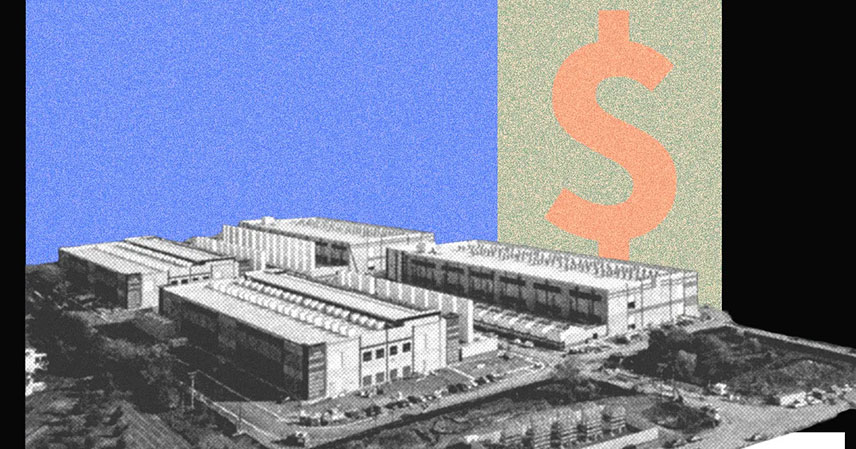
The sheer volume of capital flowing into Artificial Intelligence (AI) data center projects is truly unprecedented. Major tech giants like Microsoft, Alphabet, Meta, and Amazon recently projected their 2025 capital expenditures to reach an astonishing $370 billion. This figure is expected to climb even higher in 2026, signaling a relentless pursuit of AI dominance.
Microsoft stood out last quarter, dedicating nearly $35 billion to data centers and related investments. This colossal sum represented 45 percent of its total revenue. Such a rapid absorption of capital by a single technology is a rare phenomenon in economic history.
Warnings of an impending AI bubble are growing louder by the day. However, regardless of whether a market correction occurs, this frenzied investment is already profoundly reshaping the U.S. economy. Harvard economist Jason Furman notes that data center and software processing technology investments accounted for almost all U.S. GDP growth in the first half of 2025. Today, we will explore the impacts of these massive investments on public markets, the job landscape, and energy demands.
The Unprecedented Capital Influx & Market Dynamics 📈
The current U.S. stock market boom is largely attributable to the AI revolution. Since ChatGPT’s launch in November 2022, AI-related stocks have driven 75 percent of S&P 500 returns. They have also contributed 80 percent of earnings growth, as reported by JPMorgan’s Michael Cembalest. The central question now is the sustainability of this rapid growth.
Initially, tech giants largely funded their AI ambitions with existing cash reserves. Financial journalist Derek Thompson highlighted that the ten largest U.S. public companies began 2025 with exceptionally high free cash flow margins. This meant they possessed billions of dollars ready for investment. These funds were quickly directed towards powerful Nvidia GPUs and extensive data center buildouts.
This trend of significant internal funding has largely continued throughout 2025. Alphabet, for instance, informed investors of a revised capital expenditure estimate of $93 billion for the year. This marks a substantial increase from its prior estimate of $75 billion. Concurrently, Alphabet also reported a robust 33 percent year-over-year revenue increase. Silicon Valley, it seems, is both spending more and earning more.
This situation might suggest that everything is perfectly fine. However, a closer examination reveals potential complexities. The sheer scale of investment demands scrutiny. Doubts are emerging regarding the true, underlying financial health and future projections.
Beneath the Surface: Accounting Practices and Future Risks 🔍
The rosy financial picture presented by tech giants might not tell the whole story. Concerns are surfacing about accounting methods. Some firms appear to be employing strategies that make their financials look more favorable than reality suggests. This practice could mask underlying vulnerabilities.
A significant portion of AI investment goes into high-performance GPUs, primarily from Nvidia. Nvidia typically releases new GPU versions approximately every two years. However, companies like Microsoft and Alphabet are currently estimating that their newly acquired chips will last six years. This discrepancy is a point of contention among analysts.
Such an extended depreciation schedule could be problematic. If these companies need to upgrade their hardware sooner to maintain competitive edge – a highly probable scenario given rapid AI advancements – it will impact their bottom line. Premature upgrades would lead to accelerated depreciation. This would eat into reported profits and potentially weaken overall financial performance.
The pressure to stay at the forefront of AI innovation is immense. This pressure could force earlier hardware refreshes. Consequently, the true cost of AI infrastructure might be significantly higher than current projections indicate. This raises important questions for investors and market stability.
The Broader Economic Ripple: Jobs and Energy Consumption ⚡
Beyond financial markets, the AI investment surge is creating significant ripple effects across the broader economy. One major area is the job market. The demand for specialized AI talent is skyrocketing. This includes AI engineers, data scientists, machine learning experts, and prompt engineers. These roles require advanced skills and command high salaries.
The construction and operation of vast data centers also generate numerous jobs. These range from civil engineers and construction workers to highly skilled data center technicians. Such projects can provide substantial local economic boosts in regions hosting these facilities. They bring new infrastructure and employment opportunities.
However, the AI revolution also presents challenges for the workforce. Automation powered by AI could lead to job displacement in various sectors. This necessitates a proactive approach to reskilling and upskilling the existing labor force. Governments and educational institutions must adapt to prepare workers for future roles.
Another critical impact is on energy consumption. AI data centers are power-hungry behemoths. They require enormous amounts of electricity for their processors and cooling systems. This demand places immense strain on existing electrical grids. It can lead to increased energy costs and potential instability.
The environmental implications are also substantial. The heavy reliance on traditional energy sources contributes to carbon emissions. This fuels the urgent drive towards renewable energy solutions. Tech companies are investing in solar and wind power. Yet, sourcing clean energy at the scale required for future AI growth remains a significant challenge.
Addressing this energy demand requires massive infrastructure investment. New power plants, upgraded transmission lines, and innovative energy storage solutions are essential. The long-term sustainability of the AI boom hinges on our ability to power it responsibly and efficiently. This demands careful planning and technological advancements.
Key Insights for the Road Ahead 💡
- The unprecedented scale of AI investment is fundamentally reshaping global economic landscapes, driving both innovation and significant capital expenditure.
- While fueling substantial market returns, critical questions persist regarding the long-term sustainability and true profitability of these massive capital outlays, especially concerning accounting practices.
- The AI boom creates new, high-demand job opportunities in specialized tech and infrastructure. However, it also necessitates proactive strategies for workforce adaptation and reskilling to mitigate potential job displacement.
- The immense energy demands of AI data centers present critical challenges for grid stability and environmental sustainability, demanding innovative solutions and substantial investment in clean energy infrastructure.
- The ongoing debate between an “AI bubble” and a genuine economic transformation underscores the need for careful monitoring and strategic long-term planning from businesses, investors, and policymakers alike.
The current pace of AI investment is truly transformative. It promises to redefine industries and create new economic paradigms. Yet, this rapid evolution comes with a unique set of challenges and uncertainties. The incredible financial outlays, coupled with questions about accounting transparency and sustainability, warrant close attention.
As AI continues its ascent, its trajectory will depend on more than just technological breakthroughs. It will hinge on responsible financial stewardship, proactive workforce development, and sustainable energy solutions. Navigating this complex landscape effectively will determine the ultimate success and societal benefit of the AI revolution.